DATOUBOSS DT-4855U 48V Hybrid Solar Inverter Explained: 5500W Output, 8500W PV Input and Dual-Load Management for US 120V Homes
Images and product details come from third-party platforms and belong to their respective owners. They are shown for reference only.
Affiliate link — we may earn a commission at no extra cost to you.
About this product
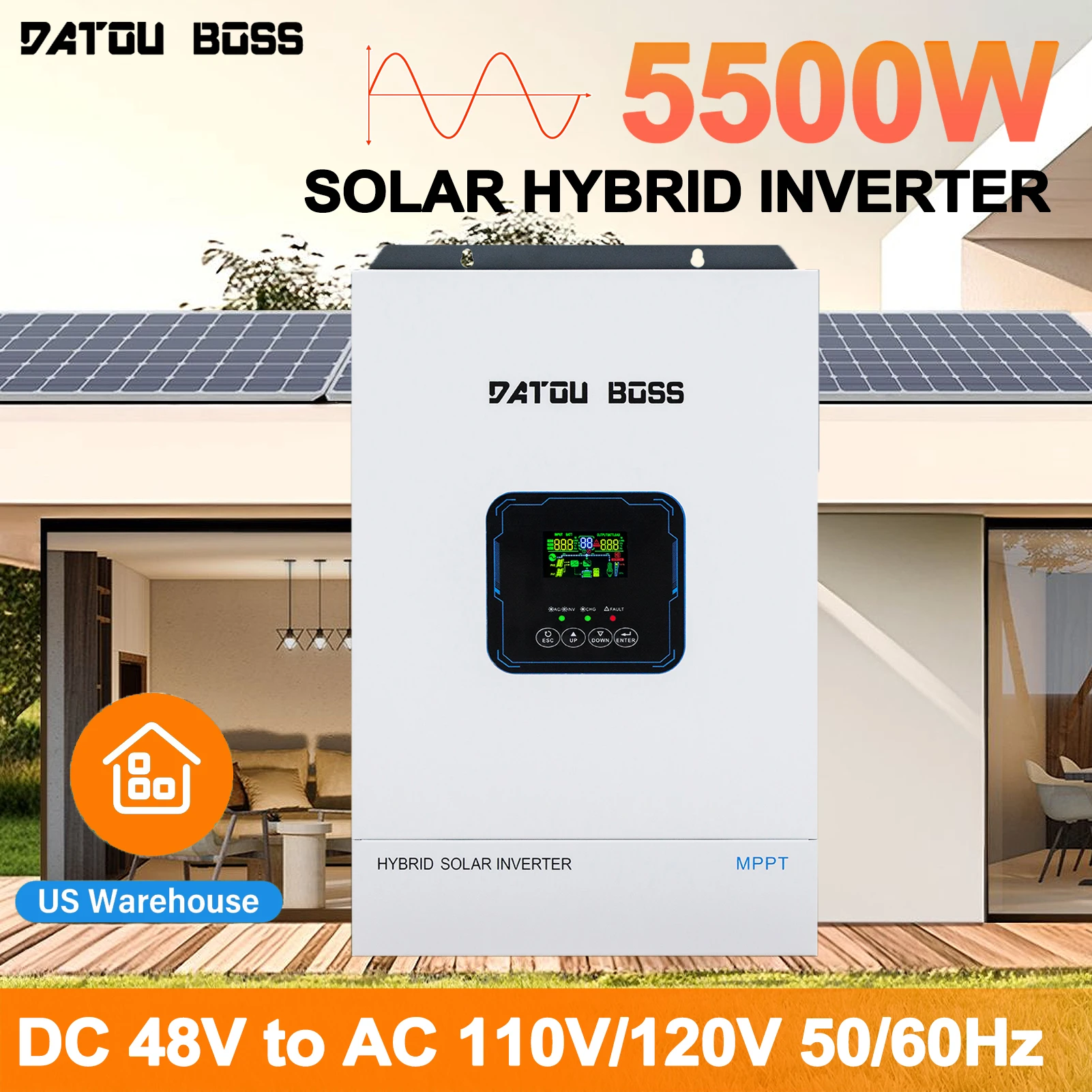
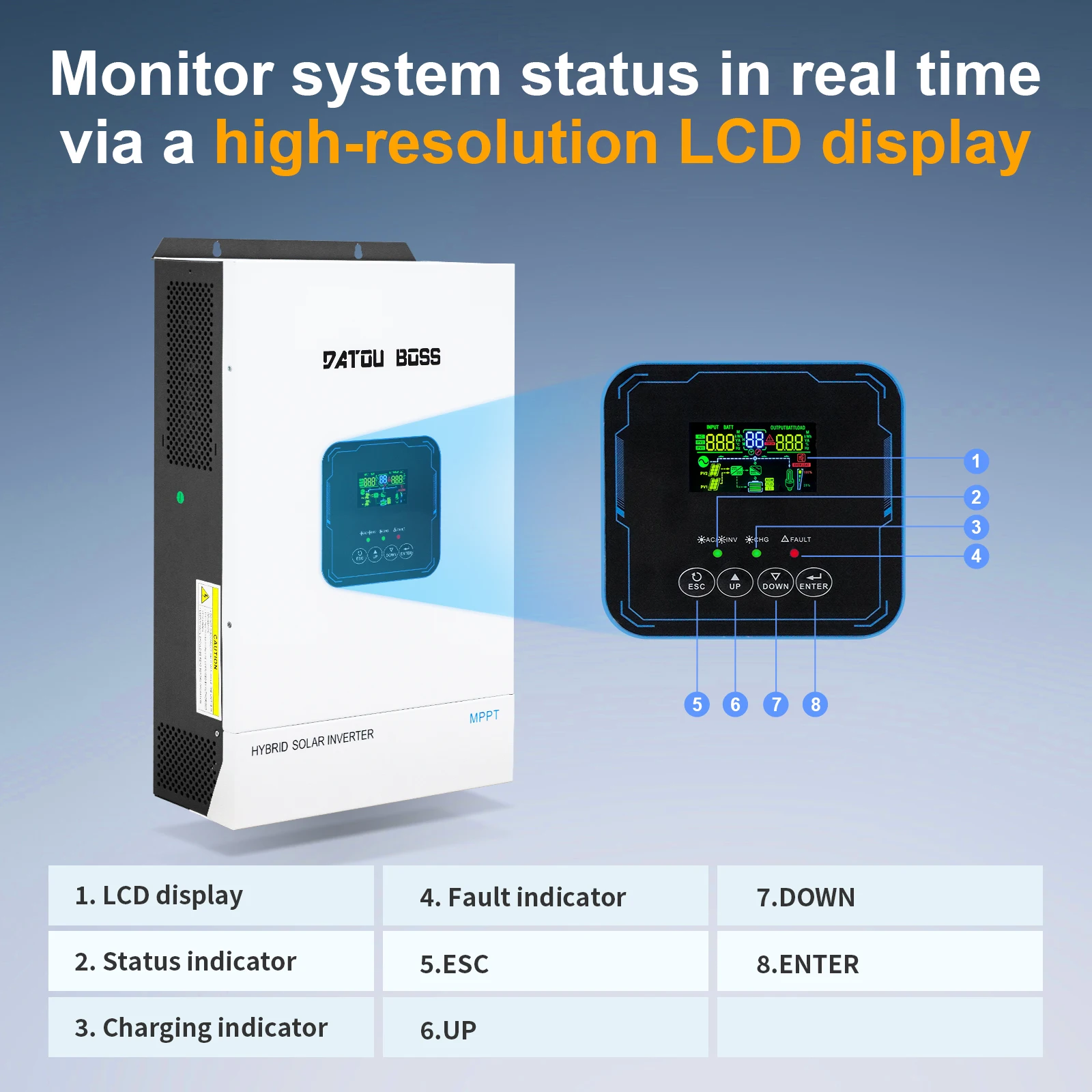
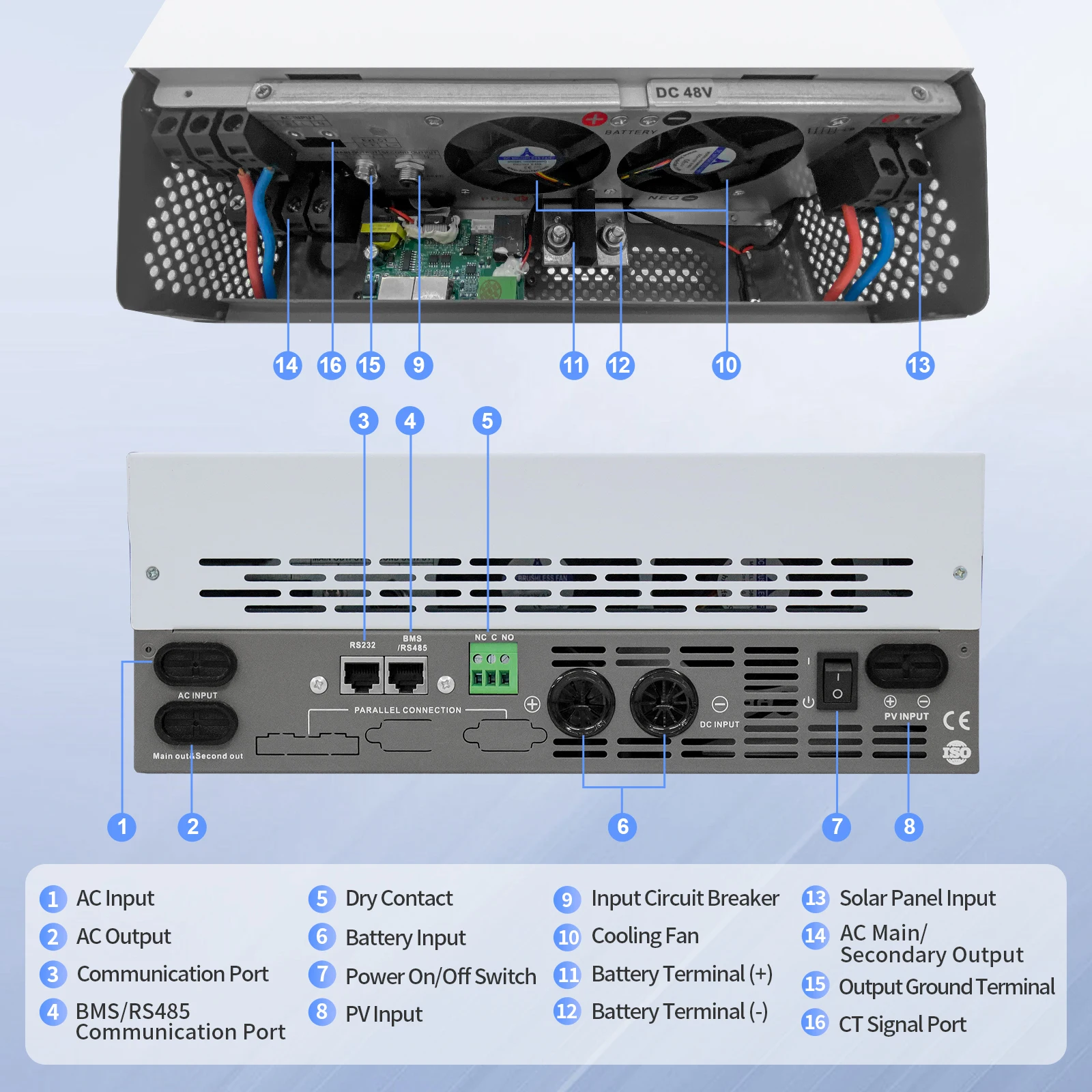
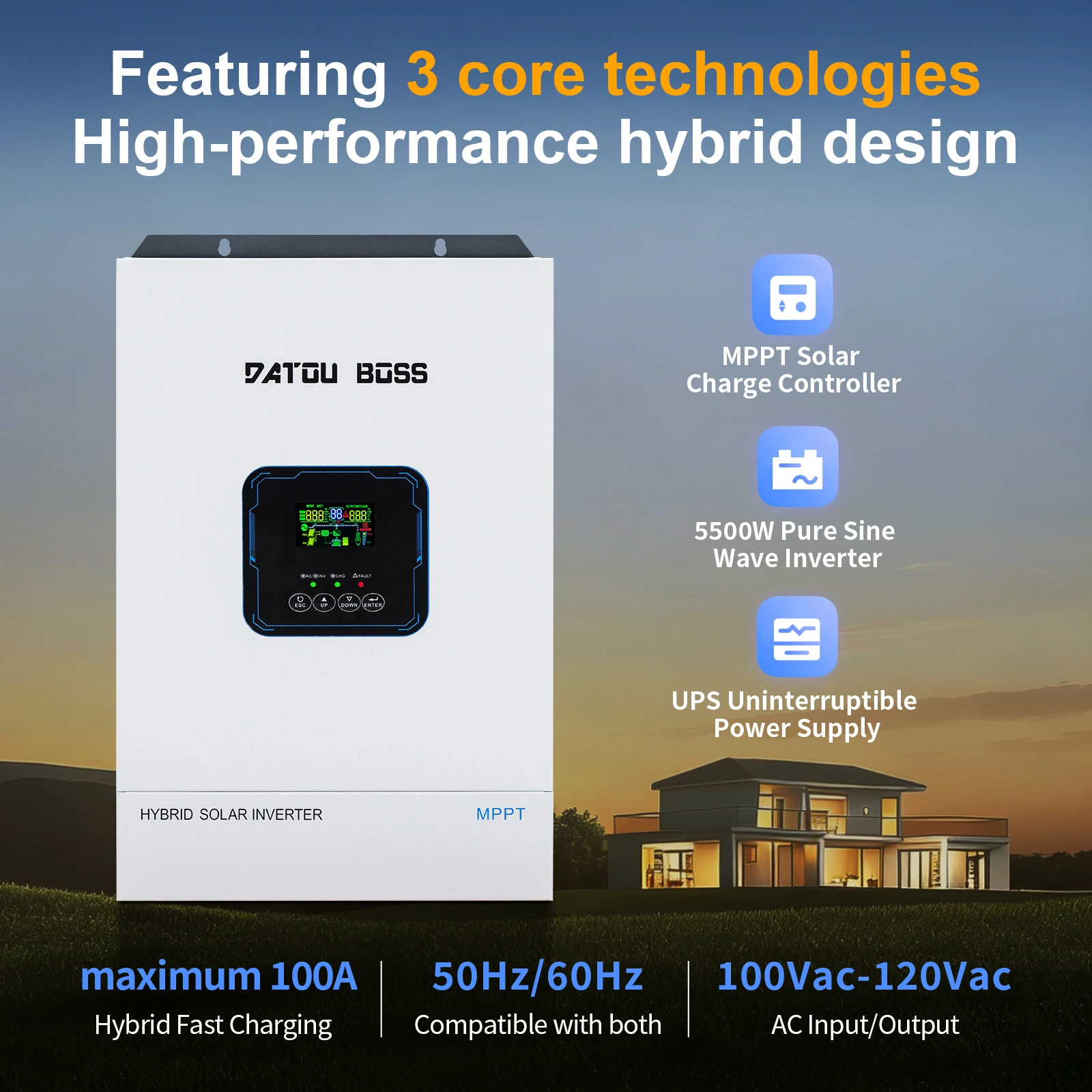
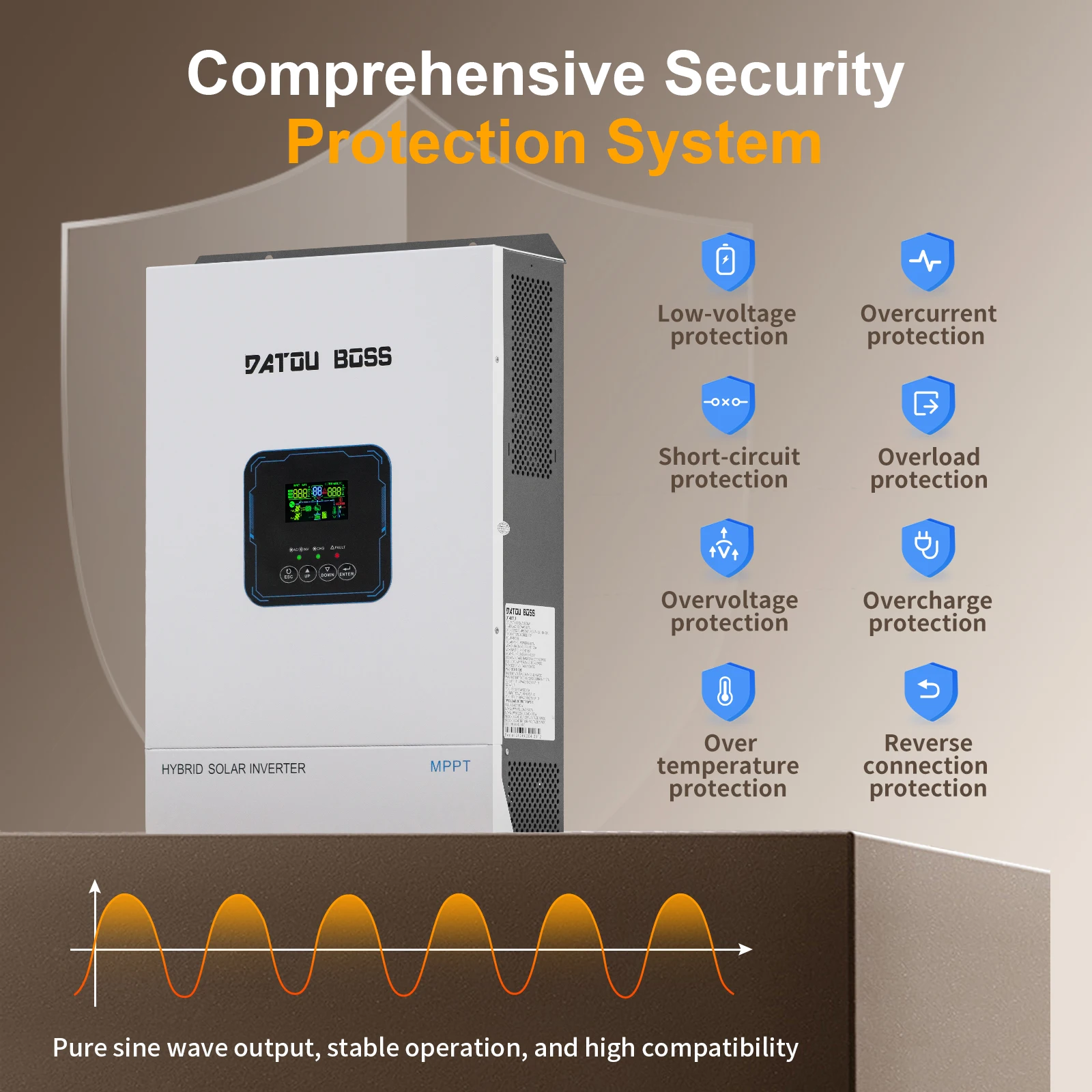
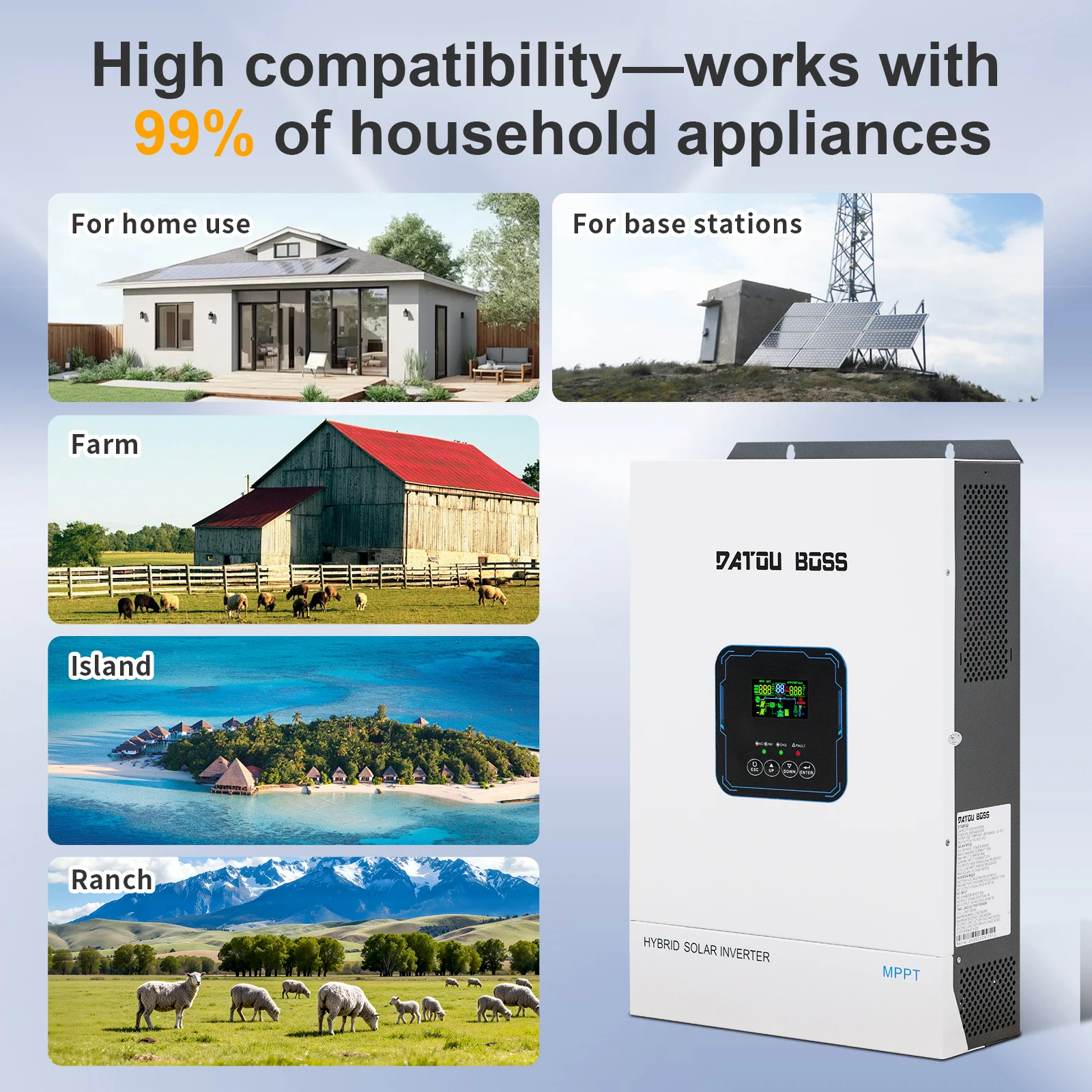
Buyers should read the DATOUBOSS DT-4855U-A-US name carefully: the advertised 8500W refers to the maximum photovoltaic input, while the continuous AC output is rated at 5500W (11000VA peak) of pure sine wave at 120VAC/60Hz for a 48V battery bank. The built-in MPPT accepts up to 8500W of panels across a wide 60-500VDC tracking window (best efficiency between 360-430V), with up to 100A of solar charging current. A distinctive feature is its dual-load output: a main 5500W load plus a second 4000W load port that automatically disconnects when battery voltage drops to 44V and reconnects at 52V, protecting essential circuits at night. The unit measures about 49.5x31.2x12.5cm, weighs 11.46kg, runs at under 50dB, carries an IP21 rating and a 3-year warranty, and supports lithium battery protocols (such as Pylontech) selectable in the settings.
Product images
Pros & cons
Pros
- Huge 8500W PV input with a 60-500VDC MPPT window gives flexible panel configuration
- 5500W continuous pure sine output at 120VAC with 11000VA peak covers most household loads
- Dual-load output automatically prioritizes essential circuits when the battery runs low
- Up to 100A solar charging recharges a 48V bank quickly in good sun
- Quiet operation under 50dB, IP21 housing, lithium battery protocol support and a 3-year warranty
Cons
- The 8500W in the model name is the PV input ceiling, not the AC output - buyers expecting 8500W of continuous load capacity will be disappointed
- Full-load MPPT efficiency drops outside the 360-430V range, so panel string design needs care
- No built-in WiFi module; remote monitoring depends on added accessories