 -59%
aliexpress
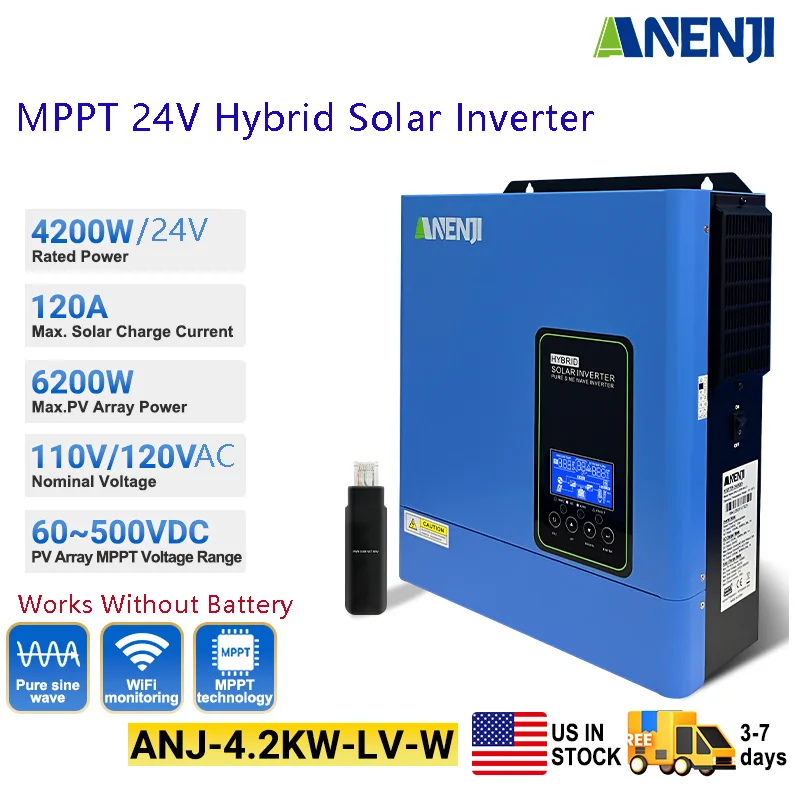
ANENJI 4200W 24V Off-Grid Solar Inverter Review-Before-Buying: 120A MPPT with 500V PV Input, 8400VA Surge for Cabins and Backup Power
Images and product details come from third-party platforms and belong to their respective owners. They are shown for reference only.
aliexpress
USD 232.08
USD 598.14
Save USD 366.06 (61%)
Affiliate link — we may earn a commission at no extra cost to you.
About this product
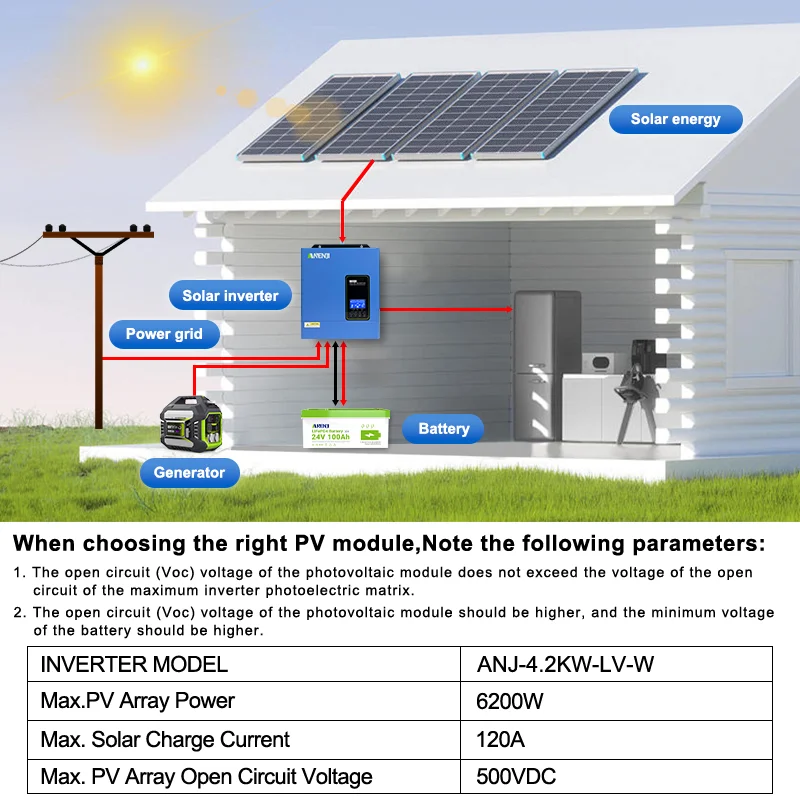
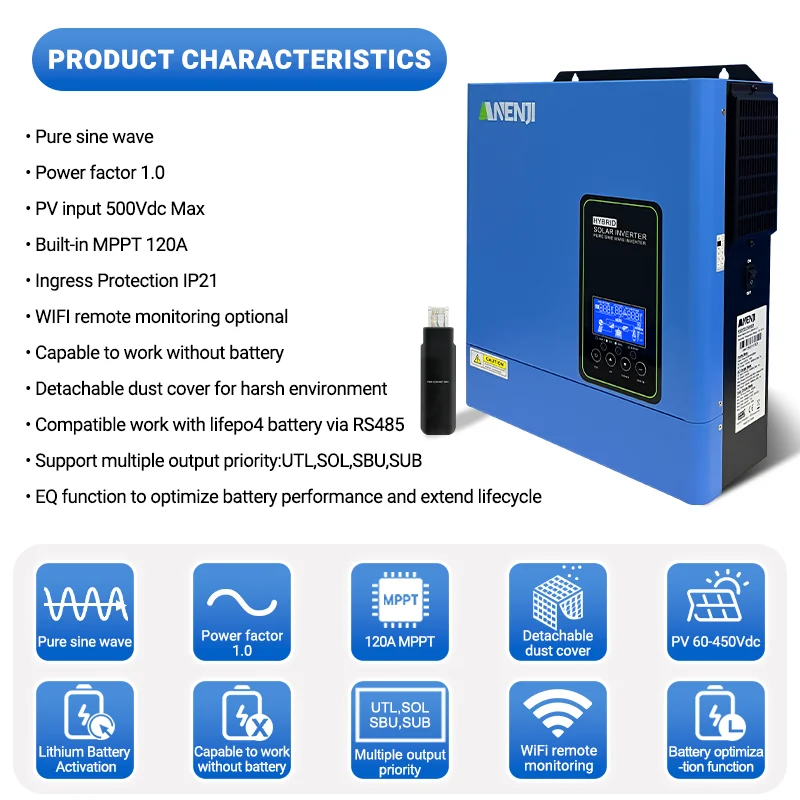
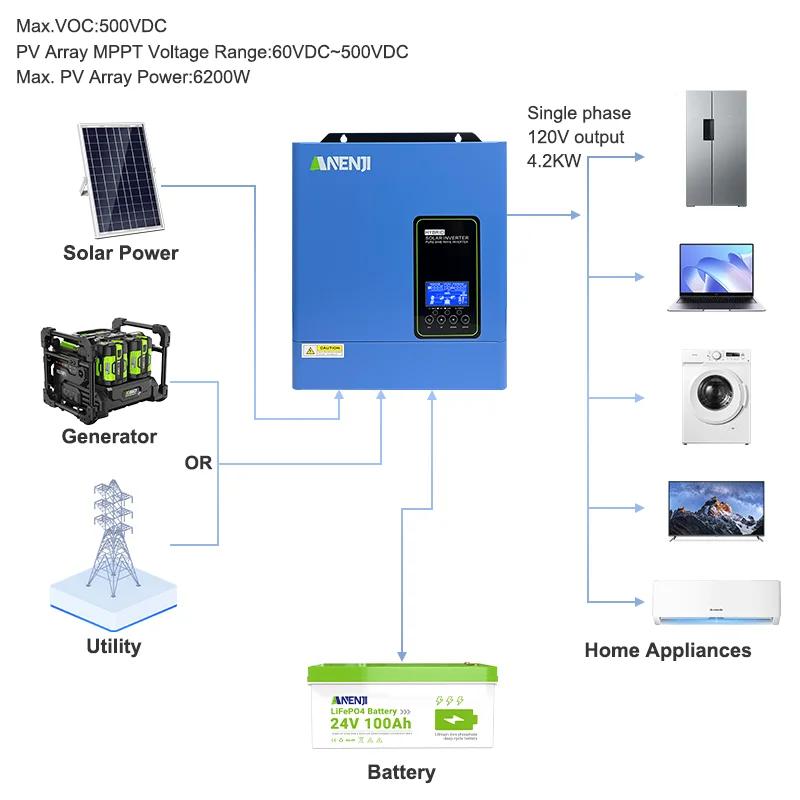
For a small off-grid cabin, a workshop, or home backup on a 24V battery bank, the ANENJI 4200W inverter is a spec-heavy option to compare before you buy. It outputs 4200W of pure sine wave power (8400VA surge) at 110/120VAC and integrates a 120A MPPT solar charger that accepts photovoltaic arrays up to 6200W with a wide 60-450V MPPT window and 500V maximum open-circuit voltage. It works with LiFePO4 and lead-acid batteries, supports LiFePO4 communication over RS485 with an EQ balancing function, and can even run directly from solar input without a battery when PV voltage is about 130V or higher. Charging can come from solar (up to 120A), grid (up to 60A), or both, and interfaces include RS485, RS232 and dry contacts with optional WiFi monitoring. Before ordering, double-check your panel string configuration stays within the 27A maximum solar input current and plan for a 24V battery bank sized to the 4200W continuous draw.
Product images
Pros & cons
Pros
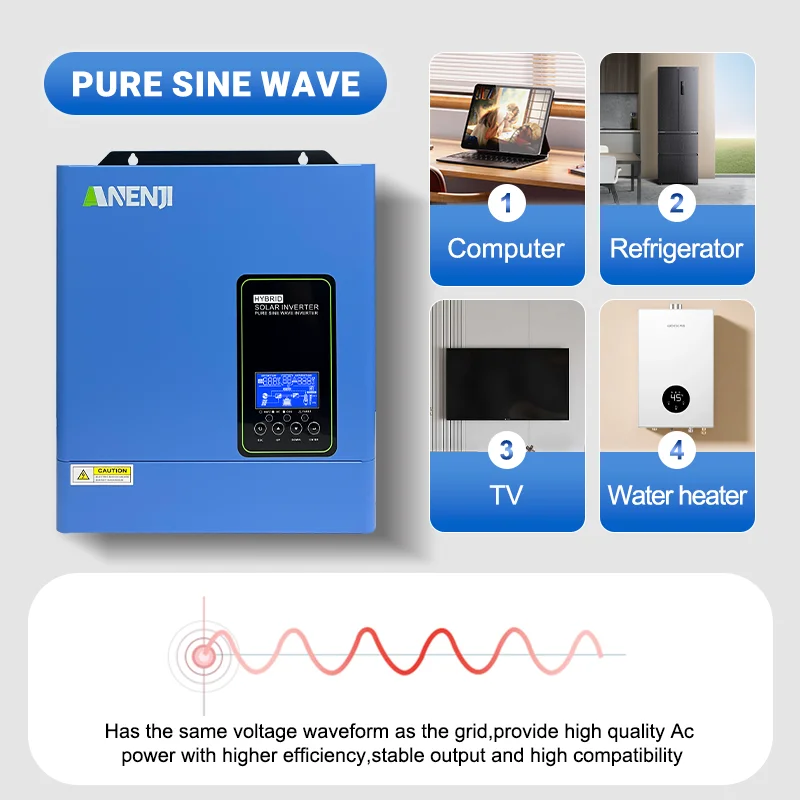
- 4200W continuous pure sine output with 8400VA surge runs refrigerators, pumps and power tools on 110/120VAC
- Built-in 120A MPPT accepts up to 6200W of PV with a wide 60-450V MPPT range and 500V max open-circuit voltage
- LiFePO4 communication over RS485 plus an EQ function helps charge and balance lithium batteries correctly
- Can operate without a battery from solar input around 130V or higher, cutting system cost
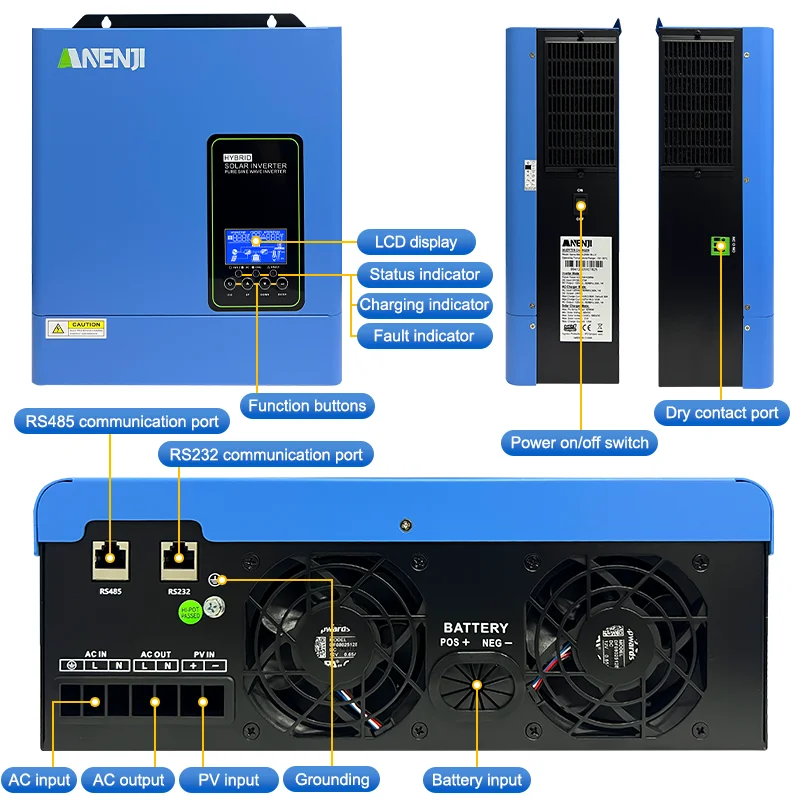
- Dual charging from solar (up to 120A) and grid (up to 60A), with RS485/RS232/dry-contact interfaces and optional WiFi monitoring
Cons
- Maximum solar input current is 27A, so very low-voltage high-current panel strings will not exploit the full 6200W limit
- No parallel capability: 4200W is the ceiling per unit, and larger loads require a bigger or additional inverter
- The 24V architecture means high DC currents at full load, demanding thick battery cables and careful sizing

Alternatives to consider
Not quite right? These similar products might be a better fit.